
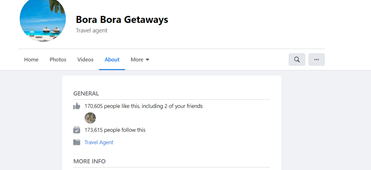

STOP IT! Please pay close attention; free trips, free RVs, free anything on social media is 99.999% a scam. I am seeing a Bora Bora one currently; come on guys. Social media outlets are global, think about that for a minute – how can anyone offer that kind of a deal to anyone, living anywhere?? Just an added tip, regarding the current Bora Bora garbage? The Meridien closed in May of 2020 for 18 to 24 months.
If you go to the Bora Bora page on FB? Take a look at the “About” – no website, no contact information…nothing. Should be a big old red flag with neon lights and music…
They are “like-farming”: What Exactly is Like-Farming?
Like-farming on Facebook is a technique in which scammers create an eye-catching post designed to get many likes and shares. Posts often give people emotional reasons to click, like, and share, such as adorable animals, sick children, the promise to win big, or political messages.
Why Do Scammers “Farm” for Likes?
As with many scams, like-farming has several different aims. When scammers ask you to “register” in order to win something or claim an offer, this is a way to steal your personal information. Other versions can be more complex. Often, the post itself is initially harmless – albeit completely fictional. But when the scammer collects enough likes and shares, they will edit the post and could add something malicious, such as a link to a website that downloads malware to your machine. Other times, once scammers reach their target number of likes, they strip the page’s original content and use it to promote spammy products. They may also resell the page on the black market. These buyers can use it to spam followers or harvest the information Facebook provides.
Protect yourself from Like-Farming with these tips
Use your good judgement. If a post says you can win something just by sharing the post, it’s probably not true. If a post tugs at your heartstrings and isn’t about someone you know personally, be wary about the truthfulness of its contents.
Don’t click “like” on every post in your feed. Scammers are counting on getting as many mindless likes as possible, so be sure you only “like” posts and articles that are legitimate. Don’t help scammers spread their con.
Be cautious when it comes to sharing your personal information. Never give out personal information, such as your full name, telephone number, address, etc. to a person or company you don’t know or trust.
Update your web browser. Make sure you always have the latest version of your browser. That way, if you do accidentally click on a scammer’s post, your browser will be more likely to warn you about suspicious sites.


 Wicked Emerald - Live From The Montérégie