This scam has been used on Facebook Marketplace for years. I had a co-worker who was scammed out of $200, in something similar.
Double and triple your verification; call the issuer, check with the bank but even so, put that money aside in a separate bank account for, at least, 3 weeks. DO NOT SPEND A CENT. This way, if the cheque bounces, you have the funds.
(I have a deep hatred of these scammers. I would love to see them all tossed into an oubliette somewhere hot, humid with lots The only way to protect ourselves, our loved ones, our friends is through knowledge and sharing what we know about these scammers.)
“Hey, how are you?”
“Hey, how’s your sore back?”
“Sorry, I’m running a little late; I’ll meet you for dinner at 6:15.”
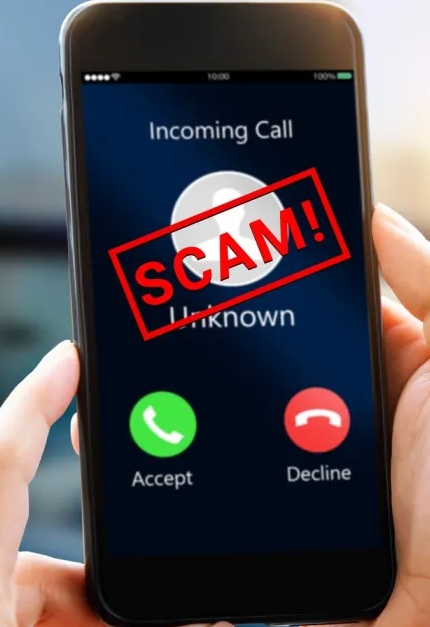
If you have been on the receiving end of an increasing number of seemingly random and innocuous texts like those, you aren’t alone. And it wasn’t a wrong number. Online scammers are increasingly turned to “wrong number” message tactics, aided by AI, to trick phone users into providing access to personal information and financial accounts.
Ann Nagel, who works at a college in suburban Chicago, received a text that was convincing enough to make her think she should respond.
“I had actually thought it was from one of my members from an organization I run in town. It had me going for a few seconds,” Nagel said.
But she quickly realized it was a scam when the texter asked Nagel to send a Vanilla Visa gift card and scratch off the back numbers. Nagel quickly ended the text exchange.
“They are a tricky bunch of thieves, no doubt,” Nagel said.
Steve Grobman, chief technology officer at McAfee, says there is usually much more going on than just an innocent wrong number. The texters have multiple objectives by sending seemingly harmless missives to your phone. First, he says, the scammers — most often based overseas — are validating that the mobile number is active and the person is willing to engage and respond.
“They are adding the number to their database so they can target it surgically for future scams,” Grobman said. They can note in their files that this person could be a potential future victim even if the initial exchange doesn’t bear fruit. And if a person, phone company, or wireless carrier blocks a number, the scammers will move onto the next one, as has been happening during the recent wave of toll fine scams.
“Once the first objective is met, what they are trying to do is build some sort of relationships,” Grobman said, and he added that these criminals are often working as part of well-funded, well-organized criminal enterprises.
Scammers are willing to put in the work to reach their ultimate aim, which is parting you from your money, and Grobman says the highest yield scams are ones that involve forging a personal relationship that can be turned into a form of what is known as a “pig butchering scam.
Life savings, retirement accounts are the ultimate target Long, draw-out, text scams — sometimes including a romantic element — are chasing someone’s life savings or retirement account. “Because there is such a large payoff, it is worth the extra time required to grow it,” Grobman said.
AI is making these once time-consuming, laborious scams more efficient and easier to target people. AI can help criminals zero in on area codes for tailored texts, comb through social media profiles, and build out family networks.
“Wrong number” texts, in particular, are increasing because of the confluence of data dumps over the past few years combined with AI’s availability.
“This allows scammers to create highly believable scams, higher levels of engagement, and higher levels of victims falling for scams,” Grobman said. “Consumers need to be very careful. You really shouldn’t engage,” he added.
But that can be difficult for some because psychology is as much a part of the text scammer’s toolkit as AI and software. “Their effectiveness taps into something much deeper: our human need for connection,” said Malka Shaw, a New Jersey-based psychotherapist in private practice who has seen a rise in text scam victims in her practice.
Shaw says the long shadow of Covid continues to casts its darkness over this problem. “We’re living in a time where loneliness has reached epidemic levels. Especially in the wake of the pandemic, so many people feel disconnected and unseen,” Shaw said. People who have endured trauma in their past or are lonely can find themselves more drawn into connections that can come via text.
“Their cognitive biases will be down, and they’ll say, ‘I need that contact.’ That is how they get you in,” Shaw said.
AI in the hands of criminals makes it easy and fast to scan social media profiles for people who might seem lonely and then connect them to a phone number.
‘Mini-ransoms’ for locked social media accounts Even if the innocuous scams don’t yield a big pig-butchering payday, they can still be worthwhile. Eder Ribeiro, director of global incident response at TransUnion, says emptying someone’s life savings is the primary goal, but hackers can still derive secondary value from the texting.
“Data is money,” Ribeiro said, adding that even if they only get a name and phone number, such info can be sold on the dark web, or perhaps they’ll get enough data to sell on the dark web and crack your email. In some cases, a text scammer will be able to extract enough of a response to track down the person’s social media accounts and lock them out and people are willing to pay to reclaim their accounts.
“We see people pay smaller amounts of money to gain access to their social media,” Riberio said, adding that those “mini-ransoms” can be between $200-$800, not the huge payday the hacker was seeking, but still something.
“They can find out stuff about most people and use it for extortion, fraud, or the information can be aggregated for the data and sold,” Ribiero said.
Dustin Brewer, senior director of proactive cybersecurity services at BlueVoyant, says the best advice for recipients of unwanted texts is to ignore the messages. Do not initiate a response and mark them as spam. These simple steps empower people by making a firm decision while removing the text from their inbox.
“And doing so makes me an undesirable target for the scammer, and no follow-up messages occur for the most part,” Brewer said. Marking it spam could help others by alerting your messaging app that this message is potential bait for a scammer. Some messaging apps use this type of reporting to detect future scams and protect other users, Brewer said.
But TransUnion’s Ribiero says, for now, expect the texts to continue. “The frequency is increasing because it works, and if you get results, you keep doing it,” he said.
This article was originally published on NBCNews.com
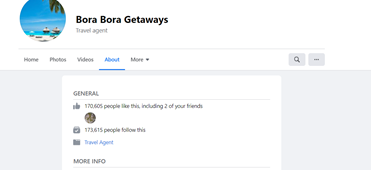
STOP IT! Please pay close attention; free trips, free RVs, free anything on social media is 99.999% a scam. I am seeing a Bora Bora one currently; come on guys. Social media outlets are global, think about that for a minute – how can anyone offer that kind of a deal to anyone, living anywhere?? Just an added tip, regarding the current Bora Bora garbage? The Meridien closed in May of 2020 for 18 to 24 months.
If you go to the Bora Bora page on FB? Take a look at the “About” – no website, no contact information…nothing. Should be a big old red flag with neon lights and music…
They are “like-farming”: What Exactly is Like-Farming?
Like-farming on Facebook is a technique in which scammers create an eye-catching post designed to get many likes and shares. Posts often give people emotional reasons to click, like, and share, such as adorable animals, sick children, the promise to win big, or political messages.
Why Do Scammers “Farm” for Likes?
As with many scams, like-farming has several different aims. When scammers ask you to “register” in order to win something or claim an offer, this is a way to steal your personal information. Other versions can be more complex. Often, the post itself is initially harmless – albeit completely fictional. But when the scammer collects enough likes and shares, they will edit the post and could add something malicious, such as a link to a website that downloads malware to your machine. Other times, once scammers reach their target number of likes, they strip the page’s original content and use it to promote spammy products. They may also resell the page on the black market. These buyers can use it to spam followers or harvest the information Facebook provides.
Protect yourself from Like-Farming with these tips
Use your good judgement. If a post says you can win something just by sharing the post, it’s probably not true. If a post tugs at your heartstrings and isn’t about someone you know personally, be wary about the truthfulness of its contents.
Don’t click “like” on every post in your feed. Scammers are counting on getting as many mindless likes as possible, so be sure you only “like” posts and articles that are legitimate. Don’t help scammers spread their con.
Be cautious when it comes to sharing your personal information. Never give out personal information, such as your full name, telephone number, address, etc. to a person or company you don’t know or trust.
Update your web browser. Make sure you always have the latest version of your browser. That way, if you do accidentally click on a scammer’s post, your browser will be more likely to warn you about suspicious sites.
Much to my chagrin, I realize that I was far too flippant, with regard to scammers and other such low lives. I treated a serious topic a little too lightly, yesterday, on Facebook.
I do forget that many people do not have my background when it comes to the internet and computers. I admit, I did have a great time laughing at the scammers but a friend brought something to my attention – she knew of someone who had fallen victim to these bastards, the end result being a fraud in the thousands.
What we need to do, as friends, neighbours, co-workers is to get the word out, particularly to older Canadians, new Canadians and friends who may not be as scam/fraud savvy as ourselves. Talk – open a conversation – discuss it – explain the types of scams and how to avoid them. Keep the dialogue going.
It isn’t just the individual at risk; while working, I ran up against a number of scams. There was the toner scam – where a fraudster would obtain the type of printer used in the office – a seemingly innocuous question and then obtain the name of an employee, an invoice would then be sent, using the employee’s name as the reference for the order. Luckily, our company had a strict purchasing policy and as I was the purchaser for most of the supplies/equipment used in our locations, I knew that the toner was not ordered and the fraud uncovered immediately. Some companies do have a more laissez-faire attitude toward office/warehouse supplies and this is where the fraudsters win and they win big.
The other fraud that I ran up against targeted the highly competitive sales market; there is an offer for a “directory” of sales leads. This comes in the form of a CD, an almost entirely useless compilation of businesses that is easily, and FREELY available online. This company managed to fool an employee and the CD arrived. It was sent back immediately but that didn’t stop harassing phone calls for payment, that went on for months.
There is little that law enforcement can do; these scammers are insulated and sometimes, as is the case with the Revenue Canada crooks; they are not even based in the country. A Canadian area code is not an indicator of the location of the call. For example: the call I received yesterday was from area code 705 and the full number was 705-530-9783. According to my little investigation, this is a landline phone number operated by Fibernetics Corporation and is located in the city of Alliston, Ontario. This means nothing however – the number and area code have been hijacked either unknowingly by Fibernetics or with their complicity. I don’t know. I reported it to Fibernetics; it remains to be seen if anything is done. There is big money in defrauding the unsuspecting and if Fibernetics is simply being duped? There are other telecommunication companies more than willing to take over.
So how do we fight back? By being vigilant. By checking and then double-checking and then triple checking credentials. By discussing the issue, on Facebook, on Twitter, on Instagram, in coffee shops, at the bus stop, in doctor or hospital waiting rooms; by bringing up the conversation at family events, community events – sharing with friends, with friends of friends.
Banks should be asked to post fraud information as our elderly and the newer Canadians may not be online savvy.
There needs to be more attention focused on these crimes – while I found the attempt by “Officer Greg Williams” hysterically funny; it is only because of knowledge spread online. It was through notification and an understanding of how government works, as well as how fraudsters work. I am fortunate – thousands upon thousands of Canadians are not.
Open up the discussion – get the information out there and drain the scammers pool of unsuspecting victims!!!
Be aware, be vigilant, share what you know, the scammer landscape is ever changing as they look for more ways to steal your money.






 Wicked Emerald - Live From The Montérégie